Watering seems like the simplest job in the garden, which is exactly why so many plants are watered badly. A daily sprinkle over the leaves feels caring, but it often does more harm than good, leaving plants weaker and thirstier than if you'd left them alone. The plant isn't asking for water more often. It's asking for water that reaches its roots.
Once you understand how roots actually drink, the whole task gets easier and takes less of your time. You water less frequently, you water at better moments, and your plants ride out dry spells that would have flattened them before.
Water deeply, not often#
Here's the principle that changes everything: soak the soil thoroughly, then wait. When you give a bed a proper drink, water sinks well below the surface and the roots grow down to follow it. Those deep roots sit in cooler, damper soil that dries out slowly, so the plant can go days between waterings without stress.
A light daily splash does the reverse. It wets only the top centimetre or two, so roots stay clustered near the surface where the sun bakes them dry within hours. You end up with plants that are permanently on the edge of thirst and completely dependent on you. Miss a day and they collapse, because you trained them to be shallow.
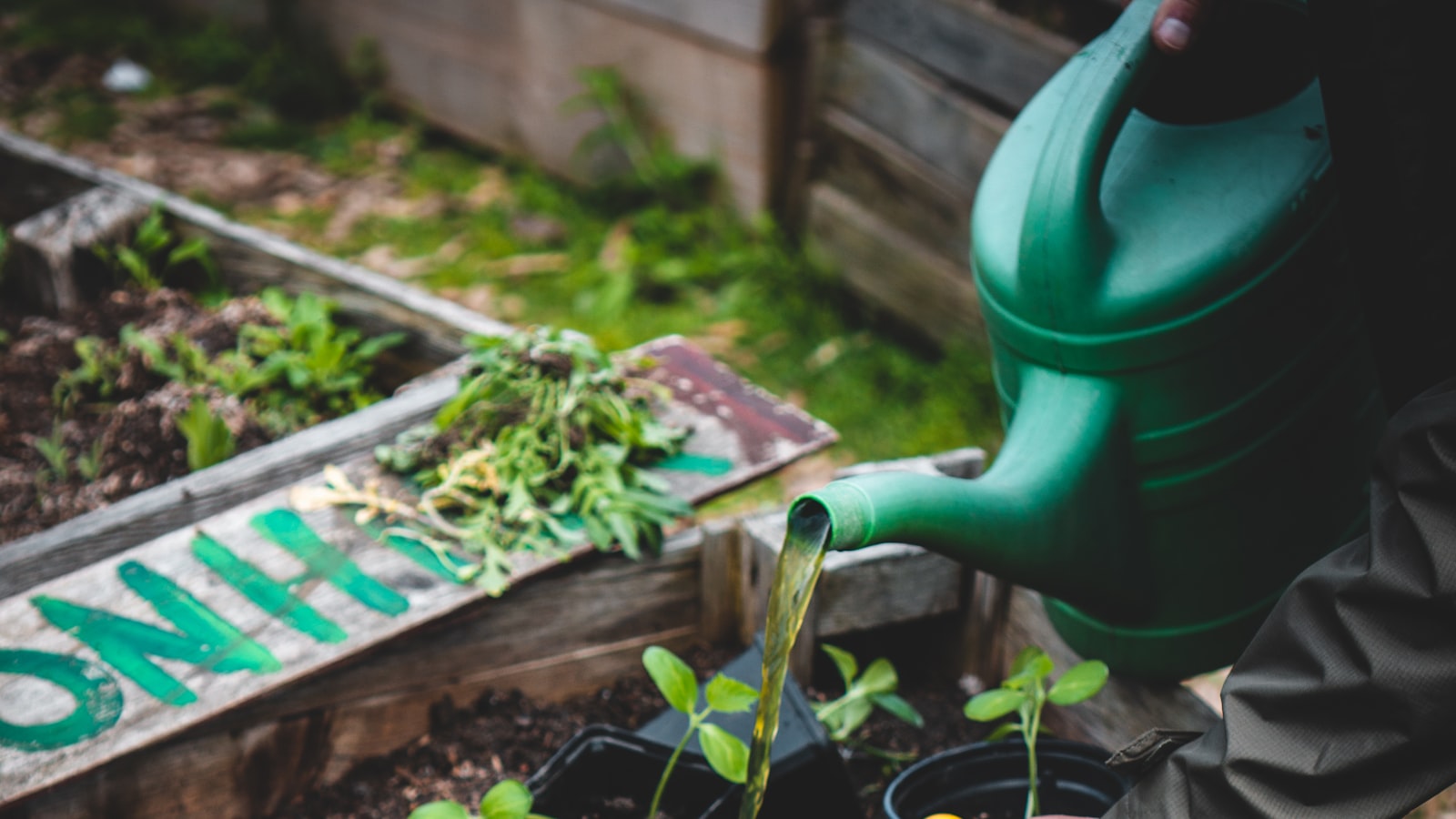
So aim for fewer, heavier waterings. Point the water at the base of the plant, at the soil, not the foliage, and let it soak in slowly rather than running off. Then check before you water again by pushing a finger into the soil. If it's damp a knuckle deep, wait. Dry roots grow deep; pampered roots grow lazy.
Deep and infrequent beats little and often, almost every time. You're not just watering the plant today. You're teaching its roots where to look for water tomorrow.
Time it right#
When you water matters nearly as much as how much. Early morning is the sweet spot for most gardens. The soil is cool, so less water evaporates before it soaks in, and the plant fills up before the heat of the day arrives. Any splashes on the leaves dry quickly in the morning sun, which matters more than you'd think.
Evening is the usual fallback, and it's fine when mornings are impossible, but it comes with a small catch. Water sitting on leaves and soil overnight, in cool damp air, is an open invitation to slugs and fungal diseases that thrive in those conditions. If you must water in the evening, aim low at the soil and keep the foliage dry.
The one time to avoid is the middle of a hot, sunny day. A good share of what you pour on evaporates before the roots ever taste it, so you waste water and still leave the plant thirsty. Water in the cool hours and every drop works harder.
Let mulch do half the job#
The best way to water less is to lose less. A layer of mulch spread over the soil, such as bark, straw, compost, or shredded leaves, acts like a lid. It slows evaporation dramatically, keeps the surface cool, and means the water you give hangs around for the roots instead of vanishing into the air.
Mulch also stops heavy watering or rain from battering bare soil into a hard crust that water then runs off rather than sinks into. Because organic mulches rot down and enrich the ground beneath them, they improve your soil at the same time, which is part of why I keep coming back to them in how to improve your garden soil. In a well-mulched bed you can genuinely halve how often you reach for the hose.
A few habits stretch your water further still:
- Water the soil, never the leaves, so it reaches the roots
- Pour slowly so it soaks in rather than running off
- Group thirsty plants together so you can water them as one job
- Use a can or a hose with a gentle rose, not a hard jet that erodes soil
Containers are a different animal#
Pots and containers play by their own rules, and it catches new gardeners out constantly. A plant in the ground can send roots outward in search of moisture; a plant in a pot is trapped in a small volume of compost that heats up and dries out with alarming speed. In warm weather, a container may need watering every single day, and a small one in full sun sometimes twice.
The tell is the weight and the surface. Lift a pot and you'll quickly learn the difference between "heavy and moist" and "light and bone dry." When you water, give enough that it runs freely from the drainage holes, which tells you the whole rootball is soaked rather than just the top. If a pot has dried out completely, water beads off and runs down the inside gap; in that case, stand it in a tray of water for half an hour so the compost can drink from below.
Good drainage is non-negotiable. Every container needs holes, and none should sit permanently in a saucer of water, because roots left standing in it rot. If you grow much in pots, it's worth reading container gardening ideas for small spaces for ways to keep them thriving through a hot summer.
Read the plant and the weather#
For all the rules, the best waterers simply pay attention. Plants tell you what they need if you look. Leaves that droop in the morning, before the day has heated up, usually mean genuine thirst; leaves that flag only in the fierce midday sun and perk up by evening are just coping with heat and don't need a thing. Watering the second kind out of panic can drown them.
New plantings are the one exception to the deep-and-infrequent rule. A seed sown near the surface, or a young plant whose roots haven't yet reached down, needs the top layer kept consistently moist until it establishes, which may mean a light water every day or two for the first few weeks. Once it's growing well and has put roots down, you can wean it onto the deeper, less frequent rhythm that builds toughness. Think of that early watering as a temporary crutch, not the long-term habit.
It also pays to catch and store what falls for free. A water butt fitted to a downpipe collects rainwater off a roof, and rain is not only free but slightly better for many plants than treated tap water. Keep it covered so it stays clean, and you'll have a ready supply through the dry spells when you need it most.
Let the weather guide you rather than the calendar. A cool, damp week may need no watering at all, while a hot, windy stretch dries things out faster than you'd guess, since wind pulls moisture from soil and leaves as surely as sun does. Skip the fixed routine, check the soil, feel the weight of your pots, and water when the plant actually needs it. Do that and you'll use less water, spend less time, and grow tougher, deeper-rooted plants that can look after themselves when you can't.